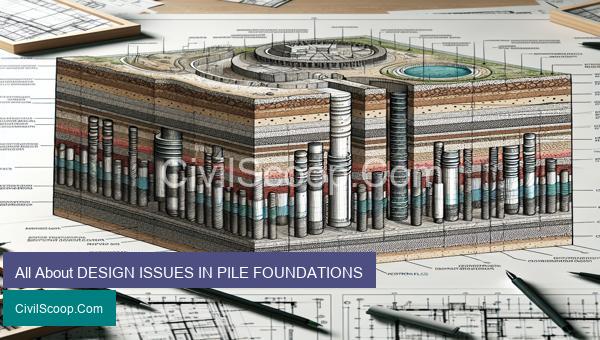
Pile foundations are a crucial aspect of structural design in any construction project. They provide a stable support system for heavy structures and are essential in maintaining the overall stability and integrity of a building. However, designing pile foundations requires careful considerations due to various design issues that can arise during the construction process. In this article, we will delve into the world of pile foundations and discuss the various design issues that architects, engineers, and construction professionals must consider to ensure the success of a project. Understanding these design issues is crucial for creating safe and efficient pile foundations that can withstand the test of time.
Table of Contents
DESIGN ISSUES IN PILE FOUNDATIONS

Pile foundations are a type of deep foundation that are used to transfer the load of a structure to a deeper and more stable layer of soil or rock. They are commonly used in civil engineering projects such as skyscrapers, bridges, and offshore structures. However, the design of pile foundations can present several challenges and issues that must be carefully considered for their successful implementation.
1. Selection of Pile Type:
The selection of the appropriate pile type is one of the most critical design issues in pile foundations. Factors such as site conditions, load requirements, and construction method must be considered in order to determine which type of pile (e.g. driven, bored, or auger) is most suitable for a particular project. Choosing the wrong type of pile can lead to failures or excessive costs.
2. Soil Conditions:
The behavior of pile foundations is heavily influenced by the properties of the surrounding soil. Soil conditions, such as soil type, strength, and density, must be thoroughly investigated and analyzed in order to properly design the piles. Inadequate knowledge of soil conditions can result in pile failure or excessive settlement.
3. Load Capacity:
The load capacity of a pile foundation is dependent on its ultimate bearing capacity and the safety factor used. Designing piles to withstand the expected loading conditions is crucial to ensure the stability and safety of the structure. A conservative approach is often taken in pile foundation design to ensure a sufficient safety margin.
4. Structural Considerations:
Pile foundations must be designed to support the structural loads imposed by the superstructure. The size, shape, and spacing of the piles should be carefully considered to ensure proper distribution of loads and to prevent excessive settlements. The interaction between the piles and the structure must also be taken into account in the design process.
5. Construction Limitations:
The construction process can also present challenges and limitations in the design of pile foundations. Limited workspace, site access, and headroom can impact the size and type of piles used. The construction method must be carefully chosen to minimize disruption and ensure the structural integrity of adjacent buildings and utilities.
6. Foundation Integrity:
Pile integrity is a crucial aspect of pile foundation design. Poor pile installation techniques or damage during construction can compromise the structural integrity of the piles. Non-destructive pile testing methods, such as sonic logging and integrity testing, can be used to ensure the integrity of piles before and after construction.
7. Environmental Conditions:
Extreme environmental conditions, such as earthquakes or hurricanes, can pose a significant threat to the stability of pile foundations. These conditions should be considered in the design process and appropriate measures, such as using longer piles or increasing the safety factor, should be implemented.
In conclusion, the successful design of pile foundations requires thorough consideration of various factors such as soil conditions, structural requirements, and construction limitations. Any deviation from the appropriate design procedures can lead to structural failure and significant economic losses. Therefore, it is important for civil engineers to carefully analyze and address the design issues in pile foundations for a safe and efficient foundation system.
Conclusion
In conclusion, it is evident that design issues in pile foundations play a crucial role in the structural integrity and stability of buildings and structures. The selection of appropriate pile type, size, and spacing, as well as proper construction and installation methods, are essential factors that must be carefully considered. Additionally, consideration of soil conditions, load-bearing capacity, and geological factors are vital in ensuring the safety and longevity of a pile foundation. Proper design and implementation of a pile foundation can prevent potential failures and ensure the longevity of a structure, making it a crucial aspect in construction projects. Therefore, it is essential to always consult with experienced engineers and geotechnical experts when designing and constructing pile foundations to avoid any potential design issues and ensure the structural stability of a building