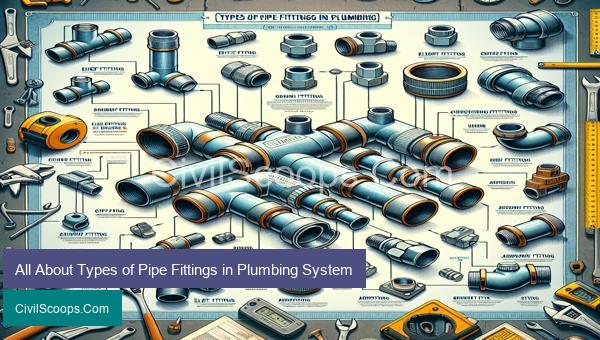
Plumbing is an essential aspect of every building, providing the necessary infrastructure for water supply and drainage. A vital component of plumbing systems is pipe fittings, which connect and control the flow of fluids through pipes. These fittings come in various shapes and sizes, each serving a specific purpose. From simple elbows and tees to more complex valves and couplings, there is a wide range of fittings utilized in plumbing systems. In this article, we will delve into the world of pipe fittings, exploring their types, functions, and importance in the plumbing system. So, whether you are a homeowner, DIY enthusiast, or a plumbing professional, read on to gain a deeper understanding of all the different types of pipe fittings used in plumbing systems.
Table of Contents
Different Types of Pipe Fittings in Plumbing System
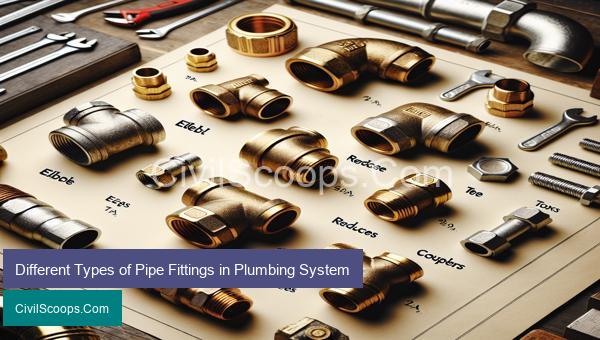
Pipe fittings are an essential component of a plumbing system and are used to connect pipes or change the direction of flow within a piping system. They are available in various sizes, shapes, and materials, and each type serves a specific purpose in a plumbing system. In this article, we will discuss the different types of pipe fittings commonly used in a plumbing system.
1. Coupling
A coupling is a type of pipe fitting that is used to connect two pipes of the same size and material. It typically consists of two female threads and is joined by screwing the two pipes into the coupling. Couplings are available in various materials such as copper, PVC, and steel.
2. Elbow
Elbows are used to change the direction of a pipeline by 90 or 45 degrees. They are available in different angles and types, such as standard, long radius, and short radius. Long-radius elbows are used in applications where a smooth flow of liquid is required, while short-radius elbows are used in tight spaces.
3. Tee
Tees are used to split the flow of a pipeline into two different directions. They have a T-shaped design with three openings – one for the supply line and two for the outlets. Tees are commonly used in water supply systems and come in different sizes and materials.
4. Reducer
Reducers are used to join two pipes of different diameters. They have a conical shape and are available in both concentric and eccentric styles. Concentric reducers are used when the pipe sizes are on the same axis, while eccentric reducers are used when the pipes are on different axes.
5. Union
Unions are a type of coupling that allows for easy disconnection of pipes for maintenance or repairs. They consist of two nuts that can be unscrewed to separate the pipe joints. Unions are commonly used in gas and water supply lines and come in various materials such as brass, steel, and PVC.
6. Adapters
Adapters are used to connect pipes of different materials, such as joining a copper pipe to a PVC pipe. They have male and female threads on each end and come in various sizes and materials. Adapters are commonly used in plumbing systems to make a secure and leak-proof connection between different types of pipes.
7. Flange
Flanges are attached to the end of a pipe to create a connection with other pipes or equipment. They are commonly used in high-pressure applications and are available in different types such as slip-on, threaded, and welded. Flanges are also used to connect pipes to valves and pumps in a plumbing system.
8. Cross
A cross is a type of pipe fitting with four openings used to connect four pipes in one location. It has a plus-shaped design, with one inlet and three outlets. Crosses are commonly used in plumbing systems where multiple lines need to be connected, such as in a water supply network.
9. Cap
Caps are used to close the end of a pipe, and they can be threaded, welded, or socket. They are commonly used in plumbing systems to seal the end of a pipe and prevent leakage. Caps are also used for capping off unused pipes or fittings.
10. Nipple
A nipple is a short pipe segment used to extend or connect two fittings. It is threaded on both ends and is available in various lengths. Nipples are commonly used to connect fixtures such as faucets and showerheads to the water supply line.
In conclusion, pipe
Types of Pipe Fittings in Plumbing System
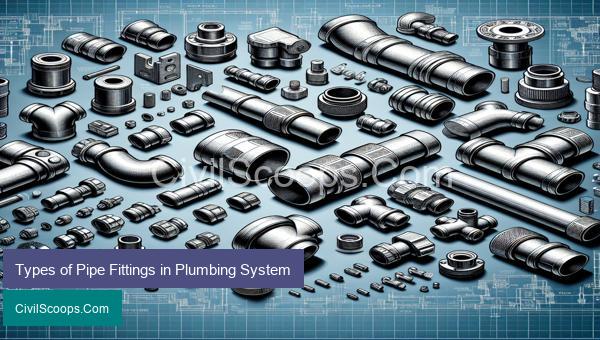
Pipe fittings are essential components used in plumbing systems to connect different types of pipes and change the direction of the flow of water. Pipes and fittings together make up the intricate network of water distribution and wastewater disposal systems in buildings. In this article, we will discuss the different types of pipe fittings commonly used in plumbing systems.
1. Elbow: Elbows are the most commonly used pipe fittings in plumbing systems. They are L-shaped and used to change the direction of the pipe run by 90 degrees. Elbows come in different angles, such as 45 degrees or 90 degrees, and are available in various materials, including PVC, copper, and galvanized steel.
2. Tee: A tee fitting is a T-shaped pipe fitting used to connect three pipes together. It has one inlet and two outlets, making it ideal for branching out water lines or connecting two pipes at a 90-degree angle. Tees are available in different sizes and materials, including brass, PVC, and copper.
3. Coupling: Couplings are used to join two pipes of the same size together in a straight line. They are made of either PVC, copper, or galvanized steel and have a threaded connection or a slip fitting for easy installation.
4. Union: A union is a type of pipe fitting that allows for easy disconnection and reconnection of pipes. It consists of three parts - a nut, a female end, and a male end, making it easy to take apart without cutting or wrenching. Unions are typically used for maintenance or repairs and come in different materials, including brass, PVC, and copper.
5. Flange: A flange is a type of fitting used to connect pipes and valves to create a watertight seal. They are usually made of cast iron, steel, or brass and have bolt holes for easy installation. Flanges are commonly used in high-pressure applications such as water treatment plants or industrial facilities.
6. Reducer: A reducer is a pipe fitting used to connect two pipes of different sizes together. It comes in two types: concentric or eccentric. A concentric reducer has a symmetrical cone-shaped design that maintains the centerline of the two pipes, while an eccentric reducer has an edge that is off-center, causing a slight offset.
7. Cross: A cross fitting has four openings and is used to connect four pipes together at a 90-degree angle. They are available in different sizes and materials, including PVC, copper, and galvanized steel.
8. Cap: A cap is a fitting used to seal the end of a pipe. It is typically made of PVC or brass and fits over the end of the pipe to create a watertight seal.
9. Plug: A plug is similar to a cap, but it is inserted into the end of a pipe instead of fitting over it. It is used to close off the end of a pipe and can be easily removed for maintenance or cleaning.
10. Bushing: A bushing is a type of fitting used to connect two pipes of different sizes by reducing the size of the opening. It is inserted into a larger pipe and can have either a threaded or slip connection.
In conclusion, there is a wide variety of pipe fittings available in the market to suit different plumbing needs. It is crucial to choose the right type of fitting for a particular application to ensure a watertight and secure connection. Proper installation of pipe fittings is essential for the smooth functioning of a
Conclusion
In conclusion, understanding the various types of pipe fittings is crucial for any plumbing system. These fittings play a critical role in connecting pipes, directing the flow of water, regulating pressure, and ensuring the overall effectiveness of the system. With this knowledge, homeowners and plumbing professionals can make informed decisions and choose the right fittings for their specific needs. It is also important to regularly inspect and maintain these fittings to ensure the longevity and efficiency of the plumbing system. By learning about the different types and functions of pipe fittings, one can have a well-functioning and reliable plumbing system in their homes or commercial spaces.