
Skylights have become increasingly popular in modern architecture, not only for their aesthetic appeal but also for their practical function. These roof windows allow natural light to flood into interior spaces, resulting in a more comfortable and inviting atmosphere. In addition to their visual and atmospheric benefits, skylights also offer various energy-saving benefits, making them a popular choice among building owners and designers. In this article, we will delve into the world of skylights and explore everything you need to know about incorporating them into your building’s roof.
Table of Contents
Types of Skylights for your Building Roofs

Skylights are great additions to any building, providing natural light and an open, airy feeling. They not only enhance the aesthetic appeal of the space but also offer practical benefits such as energy savings and improved ventilation. There are various types of skylights available in the market, each with its unique features and benefits. In this article, we will discuss the different types of skylights for building roofs.
1. Fixed Skylights
As the name suggests, fixed skylights are permanently installed and cannot be opened or closed. They are perfect for providing natural light to areas that do not require ventilation, such as hallways, stairwells, and closets. Fixed skylights are the most common type and are relatively easy and affordable to install.
2. Tubular Skylights
Tubular skylights, also known as sun tunnels, are small, tube-shaped skylights that are ideal for small spaces like bathrooms, hallways, and closets. They work by reflecting sunlight into the interior space through a highly reflective tube, making them an excellent energy-efficient option.
3. Vented Skylights
Vented skylights offer both natural light and ventilation. These skylights have a hinged opening that allows air to circulate, making them perfect for areas that require additional airflow, such as kitchens, bathrooms, and attics. They can be manually operated or motorized for easy opening and closing.
4. Pyramid Skylights
Pyramid skylights are an attractive choice for modern buildings, adding a unique architectural design element to the roof. They typically feature four equal-sized glass panels that are angled towards the center to form a pyramid shape. Pyramid skylights allow a lot of natural light to enter the space and can be fixed or vented.
5. Domed Skylights
Domed skylights have a bubble-like structure that rises from the roof and offers a panoramic view of the sky. They are commonly used in commercial buildings, such as shopping malls, schools, and offices, to provide maximum natural light. Domed skylights are available in various shapes, including circular, square, and rectangular, and can be fixed or vented.
6. Ridge Skylights
Ridge skylights are installed along the ridge of the roof, providing a traditional and elegant look to the building. They are perfect for buildings with high ceilings, as they provide ample natural light without compromising on privacy. Ridge skylights can also be opened for ventilation.
7. Splayed Skylights
Splayed skylights, also known as pyramid-sash skylights, feature a pyramid-shaped glass structure with sloping sides that extend above the roofline. They are commonly found in modern homes and are ideal for areas with high wind and snow loads. Splayed skylights can be fixed or vented and are available in various sizes and shapes.
In conclusion, there are many different types of skylights to choose from, depending on your building’s needs and design. When considering installing skylights, it is essential to consult with a professional to determine the best type for your specific building and location. Proper installation, maintenance, and regular cleaning will ensure your skylight remains functional and aesthetically appealing for years to come.
Advantages and Disadvantages of Skylight
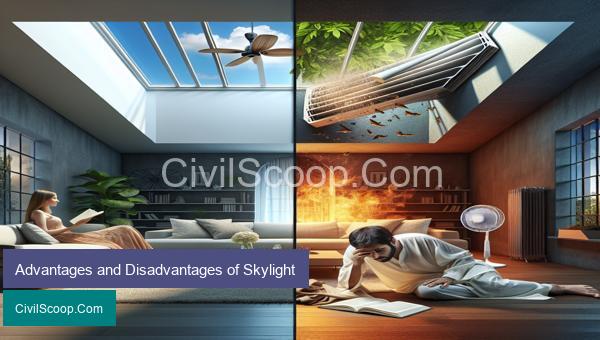
Skylights are windows installed on a roof or ceiling to allow natural light to enter a space. They can be a beautiful addition to any design, bringing in natural light and providing a view of the sky. However, like any other building element, skylights have both advantages and disadvantages that should be considered before deciding to install them. In this essay, we will discuss the advantages and disadvantages of skylights.
Advantages:
1. Natural light: The primary advantage of skylights is the natural light they bring into a space. Natural light has been proven to improve mood, boost productivity, and reduce the need for artificial lighting, saving energy and money.
2. Energy efficiency: With skylights, you can reduce your dependency on artificial lighting, which can lead to significant energy savings. This is especially beneficial in commercial buildings where lighting makes up a significant portion of the energy expenses.
3. Aesthetics: Skylights can enhance the overall aesthetic of a space by adding a sense of openness and brightness. They can also provide a unique architectural feature, making a space stand out.
4. Ventilation: Some skylights can be opened to allow for ventilation, bringing in fresh air and reducing the need for air conditioning. This can also improve air quality and prevent the buildup of moisture, reducing the risk of mold growth.
5. Privacy: Skylights can provide natural light without compromising privacy, unlike traditional windows that may require blinds or curtains to be closed.
Disadvantages:
1. Cost: Skylights can be expensive to install, especially if the structural modifications are needed. The larger the skylight, the higher the cost. Additionally, the installation requires skilled labor, which can further add to the expense.
2. Leaks and moisture buildup: Poor installation or maintenance can lead to leaks around skylights, causing damage to the building and its contents. Moisture buildup can also occur, leading to the growth of mold and mildew.
3. Heat gain and loss: While skylights can provide natural warmth in the winter, they can also contribute to heat gain in the summer. Without proper shading or glazing, skylights can cause an increase in cooling costs.
4. Glare: Depending on the angle and placement, skylights can cause glare, making it difficult to work or relax in the space. This can be a problem for rooms with electronic screens, such as offices or media rooms.
5. Maintenance: Skylights require regular maintenance to prevent leaks, cracks, and other problems. This can add to the overall cost and may be challenging for skylights installed in hard-to-reach areas.
In conclusion, skylights offer many advantages, such as natural light, energy efficiency, and aesthetics. However, they also have some disadvantages, including cost, potential for leaks and moisture buildup, and maintenance requirements. It is essential to carefully consider these aspects before deciding to install skylights in your building. Ultimately, with proper installation, maintenance, and usage, skylights can add beauty and functionality to any design.
Conclusion
In conclusion, skylights are a valuable addition to any building roof, providing numerous benefits such as natural light, energy efficiency, and ventilation. With the advancement of technology, there are now various types and designs of skylights available to suit different building roofs and needs. Proper installation and maintenance of skylights are crucial to ensure their functionality and longevity. Overall, investing in skylights for your building roof can significantly enhance the aesthetics and functionality of your space, making it a worthwhile investment for both residential and commercial properties.