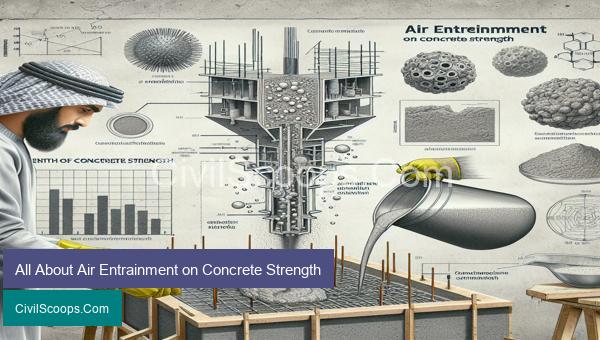
Air entrainment refers to the process of deliberately introducing tiny air bubbles into concrete during the mixing stage. This may seem counterintuitive, as we typically think of concrete as a dense and solid substance. However, these tiny air bubbles actually play a crucial role in enhancing the strength and durability of concrete. In this article, we will explore the concept of air entrainment in concrete and its impact on the strength and performance of this essential building material. We will delve into the science behind air entrainment, the methods used to achieve it, and the benefits it brings to concrete. Whether you are a construction professional or a curious individual looking to expand your knowledge, this article will provide a comprehensive understanding of all things air entrainment and its effects on concrete
Table of Contents
Effect of Air Entrainment on Concrete Strength
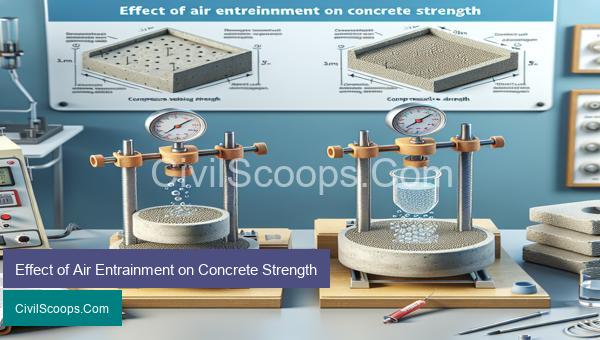
Air entrainment is a process that involves the introduction of tiny air bubbles into concrete during mixing. These bubbles act as miniature ball bearings, which increase the workability, durability, and strength of the concrete. The effect of air entrainment on the strength of concrete is well-documented and has been extensively studied by civil engineers.
One of the main advantages of air entrained concrete is its ability to withstand freezing and thawing cycles. When water freezes, it expands, and the pressure exerted by the freezing water can cause concrete to crack. However, with the presence of air bubbles, the water has room to expand, and this prevents the formation of large internal pressures that can lead to cracking. This makes air entrainment especially beneficial in areas with cold climates.
In addition to its resistance to freezing and thawing, air entrainment also improves the durability of concrete. The air bubbles act as a lubricant, reducing internal friction and making the concrete more workable. This results in a more homogenous mix, reducing the likelihood of delamination and increasing the resistance to abrasion and erosion.
Moreover, the presence of air entrainment in concrete can improve the bond between the paste and the aggregate, leading to an increase in the compressive strength of the concrete. The air bubbles act as barriers and prevent the formation of large cracks, thus increasing the strength of the concrete during compressive stresses.
However, it is important to note that the effect of air entrainment on the strength of concrete is not always positive. Excessive air entrainment can reduce the strength of concrete, especially in high-strength applications. This is because the air bubbles can act as weak spots in the concrete, resulting in reduced strength and durability. Therefore, the amount of air entrainment should be carefully controlled and monitored during the mixing process.
In conclusion, the inclusion of air entrainment in concrete has a significant impact on its strength and durability. It provides protection against damage due to freezing and thawing, improves the bond between paste and aggregate, and enhances the workability and homogeneity of the concrete. However, its application should be carefully considered and controlled to prevent any negative effects on the strength of the concrete. As a civil engineer, it is important to understand the effects of air entrainment and use it judiciously to achieve optimal concrete strength in construction projects.
Conclusion
In conclusion, air entrainment is a crucial factor in determining the strength and durability of concrete. Through the incorporation of air bubbles into the concrete mixture, the overall strength and workability of the material can be greatly improved. Various methods, such as chemical admixtures, mechanical mixing, and natural methods, can be used to introduce air into the concrete mix. It is important for concrete producers and contractors to consider the appropriate air entrainment method based on their project requirements and environmental conditions. Additionally, proper testing and monitoring of air entrainment levels is essential for ensuring the desired strength and performance of concrete. By understanding the principles and benefits of air entrainment on concrete strength, it is possible to produce high-quality and long-lasting structures that can withstand harsh