
Building a strong and stable foundation is crucial for any structure, both above and below ground level. However, what many may not realize is that the soils and groundwater surrounding a foundation can have a significant impact on its integrity and durability. With the increasing frequency of extreme weather events and rising groundwater levels, it is more important than ever to understand the potential attacks that soils and groundwater can pose to foundation structures. In this article, we will delve into the various types of soil and groundwater attacks, their effects on foundations, and the strategies and solutions to mitigate these risks. By understanding all about foundation structures from soils and groundwater attacks, we can better ensure the safety and longevity of our built environments.
Table of Contents
How to Protect Foundation Structures from Soils and Ground Water Attacks?
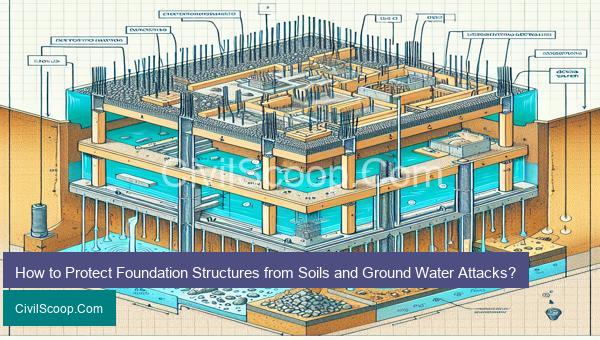
Civil engineering structures, such as buildings, bridges, and roads, rely heavily on the stability and strength of their foundation. The foundation serves as the base on which the entire structure rests, providing support and distributing the load of the structure to the underlying soil. However, soils and groundwater can pose significant risks to the foundation, compromising its stability and potentially leading to the failure of the entire structure. Therefore, it is crucial to protect foundation structures from soil and groundwater attacks.
1. Conduct a Soil Investigation
The first step in protecting foundation structures from soils and ground water attacks is to conduct a detailed soil investigation. This involves studying the geotechnical properties of the site, including the type and characteristics of the soil, its bearing capacity, and its potential for settlement, expansion, or erosion. This information helps engineers to design and construct the foundation accordingly, taking into consideration the potential risks that the soil may pose.
2. Use Appropriate Foundation Design
Based on the results of the soil investigation, engineers can determine the most suitable type of foundation for the specific site. For instance, if the soil is loose and of low bearing capacity, a deep foundation such as piles or caissons may be required. On the other hand, if the soil is stable and can support the load of the structure, a shallow foundation like spread footings may be sufficient. Proper foundation design is crucial in ensuring the stability of the structure and protecting it from soil and groundwater attacks.
3. Install Drainage Systems
Groundwater can be a significant threat to the stability of the foundation. If the water table is high, it can exert pressure on the foundation, causing it to fail. To prevent this, engineers should design an efficient drainage system to divert the water away from the foundation. This can be achieved by installing perimeter drains, French drains, or sump pumps, depending on the site conditions.
4. Utilize Soil Stabilization Techniques
In some cases, the soil may be highly corrosive, acidic, or expansive, which can cause significant damage to the foundation. In such cases, soil stabilization techniques such as chemical grouting, cement grouting, or soil mixing can be used to improve the soil’s properties and prevent it from attacking the foundation. These techniques involve injecting specific chemicals or cement into the soil to modify its properties and increase its stability and strength.
5. Apply Waterproofing Techniques
Moisture, especially in the form of groundwater can penetrate into the foundation and weaken it over time. To prevent this, waterproofing techniques such as applying waterproof membranes, coatings, or sealants can be used. These techniques create a barrier that prevents water from seeping into the foundation and causing damage.
6. Regular Maintenance and Monitoring
Regular maintenance and monitoring of the foundation are essential in identifying any potential issues early on and taking corrective measures. This includes inspecting for cracks, signs of settlement, or water infiltration and addressing them promptly to prevent further damage.
In conclusion, protecting foundation structures from soils and groundwater attacks is a crucial aspect of civil engineering. It requires a thorough understanding of the site conditions and proper design and construction techniques to ensure the stability and longevity of the structure. By conducting a detailed soil investigation, using appropriate foundation design, implementing drainage and soil stabilization techniques, and regular maintenance and monitoring, engineers can effectively protect foundation structures from soil and groundwater attacks.
Conclusion
In conclusion, foundation structures are an essential component of any building project and must be carefully designed, constructed, and maintained to withstand potential attacks from soils and groundwater. Through understanding the different types of attacks that can occur, such as settlement, erosion, and water infiltration, engineers and builders can take the necessary precautions to ensure the stability and longevity of the foundation. Proper site investigation, design considerations, and continuous monitoring and maintenance are crucial in preventing foundation failure. It is important to always prioritize safety and quality in the construction of foundation structures to avoid costly and potentially dangerous consequences. By implementing the guidelines and techniques discussed in this article, we can mitigate risks and build stronger foundations for the buildings of today and tomorrow.