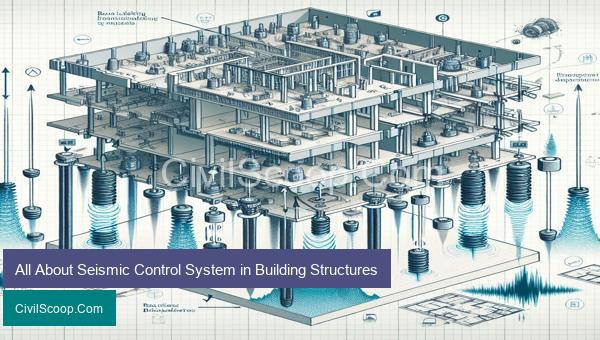
Building structures are constantly subject to various external forces such as wind, gravity, and seismic waves. Among these, seismic waves generated by earthquakes are a major threat to the stability and safety of buildings. To deal with this challenge, engineers have developed seismic control systems that aim to mitigate the impact of seismic waves on building structures. These systems are essential in regions prone to earthquakes, as they provide a means to enhance the resilience of buildings against seismic events. In this article, we will explore all about seismic control systems in building structures, including their types, working principles, and benefits.
Table of Contents
Types of Seismic Control System in Building Structures
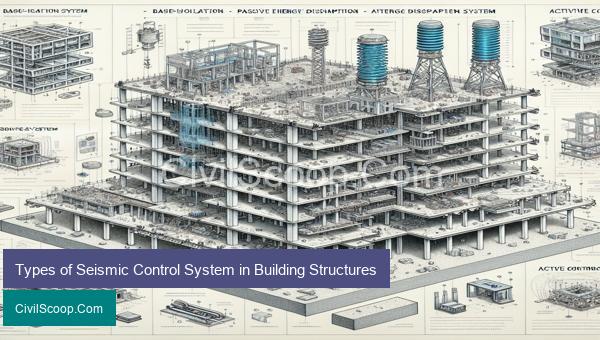
Seismic control systems are an essential element in building structures located in areas prone to earthquakes. These systems are designed to reduce the impact of seismic forces on buildings and protect them from potential damage. There are several types of seismic control systems used in building structures, each with its unique advantages and limitations. In this article, we will discuss the three most commonly used seismic control systems in building structures: base isolation, passive energy dissipation, and active control.
1. Base Isolation:
Base isolation is one of the oldest and most commonly used seismic control systems in building structures. It involves placing a flexible or sliding base between the foundation and the superstructure. This base acts as a shock absorber, allowing the building to move independently of the ground during an earthquake. This movement reduces the seismic forces and energy transferred to the building, thus minimizing damage.
Base isolation systems typically consist of lead-rubber bearings, sliding bearings, or a combination of both. Lead-rubber bearings have a steel core surrounded by layers of rubber and steel plates. During an earthquake, the rubber layers deform and dissipate energy, while the steel layers provide strength and flexibility. Sliding bearings, on the other hand, consist of steel plates that slide on a smooth surface, allowing the building to move horizontally during an earthquake.
2. Passive Energy Dissipation:
Passive energy dissipation, also known as damper systems, reduce the seismic forces on building structures by dissipating energy through inelastic deformation. There are several types of dampers used in building structures, including viscoelastic dampers, friction dampers, and tuned mass dampers.
Viscoelastic dampers are made of layers of rubber and steel, similar to lead-rubber bearings, but with a different ratio of rubber to steel. These dampers convert seismic energy into heat, reducing the amplitude of vibrations in the building. Friction dampers consist of plates that slide over each other, dissipating energy through friction. Tuned mass dampers are assemblies of weights and springs that vibrate in the opposite direction of the building, reducing its movement during an earthquake.
3. Active Control:
Active control systems use sensors to detect seismic activity and actuators to counteract it. These systems continuously monitor the building’s response to an earthquake and apply forces to counteract the seismic forces. Active control systems are highly advanced and require complex algorithms and computer-controlled actuators to function accurately.
There are two types of active control systems: passive-active systems and hybrid systems. Passive-active systems use conventional passive dampers along with active actuators. These systems react to seismic forces and only activate when the ground motion exceeds a threshold. Hybrid systems combine both active and passive systems to control the response of a building to an earthquake actively.
In conclusion, seismic control systems are critical for the safe design and construction of building structures in seismic zones. Each type of seismic control system has its unique advantages and limitations, and the selection of the most suitable system depends on various factors such as building height, soil conditions, and budget. By using these systems, engineers can ensure the safety and resilience of buildings during earthquake events, protecting both people and property.
1. Passive Seismic Control System

Passive seismic control systems are a type of architectural and engineering design that aim to reduce the impact of earthquakes on buildings and structures. They use a combination of structural design, materials, and components to mitigate the effects of ground motion during an earthquake.
One of the main features of a passive seismic control system is its ability to dissipate, minimize and redirect the energy generated by seismic waves. This is achieved by using different techniques and building materials such as base isolation, dampers, and bracing systems.
The first technique in passive seismic control is base isolation, which involves separating the building or structure from its foundation with isolators. These devices are usually made of rubber, steel, or a combination of both and act as shock absorbers, allowing the foundation to move independently from the building above it during an earthquake. This helps to reduce the transmission of seismic energy to the building and significantly reduces its response to ground motion.
Another technique commonly used in passive seismic control is dampers. These are devices designed to absorb and dissipate the energy generated by an earthquake. Dampers can be installed at different levels of a building’s structure, such as at the roof, in the walls, or at the foundation. They can be classified as either viscous or friction dampers, depending on the mechanism used to dissipate energy. Viscous dampers use fluid to absorb energy, while friction dampers use friction materials to dissipate it.
Additionally, bracing systems are often used in passive seismic control to improve the overall stiffness and strength of a building or structure. These can include diagonal braces, shear walls, or outrigger systems. These systems work by transferring the seismic forces to the building’s foundation, reducing the overall impact of the earthquake.
Passive seismic control systems are designed to act automatically without requiring any external power supply. This means that they are always active and do not rely on human intervention during an earthquake. This feature makes them a reliable and cost-effective choice for mitigating the effects of earthquakes on structures.
One of the major advantages of implementing passive seismic control systems is their ability to minimize damage and reduce the possibility of collapse during an earthquake. This is not only beneficial for human safety, but it also helps to reduce the cost of repairs and reconstruction.
Furthermore, passive seismic control systems have relatively low maintenance requirements, which makes them a practical solution for both new and existing buildings. They also have a long lifespan, with some systems having a design life of up to 50 years.
In conclusion, passive seismic control systems play a crucial role in protecting buildings and structures from the damaging effects of earthquakes. They offer a cost-effective, durable, and reliable solution for mitigating the impact of ground motion. With the increasing frequency and severity of earthquakes in many parts of the world, the use of passive seismic control systems is becoming more widespread and essential in the field of civil engineering.
2. Active Seismic Control System
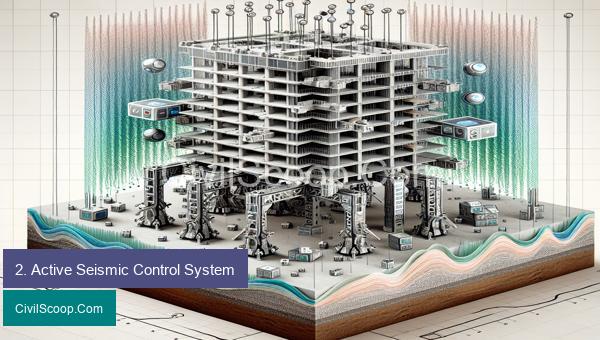
Active seismic control, also known as active vibration control, is a method used in civil engineering to mitigate the effects of seismic activity on structures. This technique involves the use of specially designed systems that actively counteract the vibrations caused by earthquakes, reducing the damage and potential collapse of buildings and other structures.
One type of active seismic control system is the active mass damper (AMD). This system consists of a large mass, such as a concrete block, that is suspended within a structure using springs and dampers. The mass is controlled by sensors that detect the seismic waves and send signals to actuators that move the mass in the opposite direction of the vibrations. This effectively cancels out the vibrations and reduces the forces acting on the structure.
Another type of active seismic control system is the active tendon system. This method uses high-strength steel tendons that are anchored to the top and bottom of a building. These tendons are connected to hydraulic actuators that can adjust the tension of the tendons in response to seismic activity. By controlling the tension of the tendons, the system can modify the stiffness of the building and reduce its response to earthquakes.
In addition to these systems, there are also actively controlled base isolators that can reduce the forces transmitted to a building’s foundation. These isolators consist of hydraulic or pneumatic devices that act as shock absorbers, minimizing the effects of ground motion on the structure.
One of the main advantages of active seismic control systems is that they can be adjusted and tailored to specific structures and seismic conditions. This flexibility allows for a more effective and efficient response to earthquakes, compared to traditional passive systems that are static and cannot be adjusted.
Active seismic control systems also have the ability to dissipate seismic energy, reducing the risk of damage to the structure. This is especially beneficial for tall buildings and other structures with large mass and potential for significant sway during an earthquake.
Despite their effectiveness, active seismic control systems do have some limitations. They require a power source for operation, which can be a challenge in areas with frequent earthquakes that may cause power outages. These systems also require regular maintenance and monitoring to ensure they are functioning properly.
In conclusion, active seismic control systems are a powerful tool for reducing the impact of earthquakes on structures. They can help mitigate damage and prevent collapses, making buildings and other infrastructure safer for the people who use them. As technology continues to advance, we can expect to see even more innovative and effective active seismic control systems being used in civil engineering.
3. Hybrid Seismic Control System

A hybrid seismic control system is a structural engineering technique that combines different seismic control methods to provide maximum protection against earthquake damage. This system is designed to reduce the impact of strong ground motions on buildings and other structures by dissipating and absorbing seismic energy.
There are three main components of a hybrid seismic control system: active control, passive control, and semi-active control. Active control involves using sensors, actuators, and a control system to actively counteract the seismic forces on a structure. Passive control utilizes energy dissipative devices such as dampers and isolators to absorb and dissipate the energy from an earthquake. Semi-active control combines elements of both active and passive control by using controllable devices that can adapt to the intensity of the earthquake.
One of the key advantages of a hybrid seismic control system is its ability to provide a more holistic approach to seismic protection. By combining multiple control methods, this system can mitigate a wide range of seismic forces, including both short and long-period motions. This makes it particularly effective in mitigating damage from large earthquakes.
Another benefit of using a hybrid seismic control system is its adaptability to different types of structures. It can be implemented in both new and existing buildings, making it a cost-effective solution for earthquake strengthening. Additionally, it is suitable for a variety of construction materials, such as steel, concrete, and timber.
One example of a hybrid seismic control system is the use of a tuned mass damper (TMD) in conjunction with active control. A TMD is a passive control device that consists of a suspended mass on a spring and is effective in reducing the amplitude of structural vibrations. When combined with an active control system, the TMD can further reduce the seismic forces by actively counteracting the vibrations.
In recent years, the use of hybrid seismic control systems has become increasingly popular in earthquake-prone regions. This is due to their proven effectiveness in protecting structures from severe damage during earthquakes. Many modern buildings, such as high-rise towers and bridges, are now being designed with hybrid seismic control systems to provide maximum safety for occupants.
In conclusion, a hybrid seismic control system is a highly effective and versatile technique for minimizing the impact of seismic forces on structures. Its combination of active, passive, and semi-active control methods make it a comprehensive solution for seismic protection. As we continue to face the threat of earthquakes, the implementation of hybrid seismic control systems will play a crucial role in safeguarding our built environment.
Conclusion
In conclusion, seismic control systems play a crucial role in ensuring the safety and stability of building structures during earthquakes. From base isolation and dampers to bracing and reinforcing techniques, there are various methods used to mitigate the effects of seismic forces. It is important for structural engineers and architects to carefully consider the design and implementation of these systems in order to withstand the unpredictable nature of earthquakes. With continuous advancements in technology and a better understanding of seismic behavior, the future of seismic control systems looks promising in providing stronger and more resilient building structures. Ultimately, the implementation of effective seismic control systems can help save lives and minimize damages, making them an essential aspect of any building project in earthquake-prone regions.