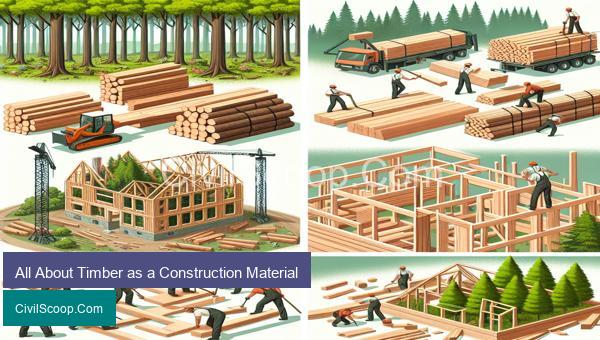
Timber has been a fundamental construction material for centuries, and its use continues to grow in popularity due to its versatility, sustainability, and overall aesthetic appeal. With its natural beauty and impressive structural properties, timber has become an essential component in the design and construction of various buildings, from traditional homes to modern high-rises. In this article, we delve into the world of timber as a construction material and explore its various forms, benefits, and challenges in today’s building industry. Whether you are a builder, architect, or simply intrigued by the world of construction, this fascinating material has much to offer and continues to shape the built environment in remarkable ways.
Table of Contents
Types of Defects in Timber as a Construction Material
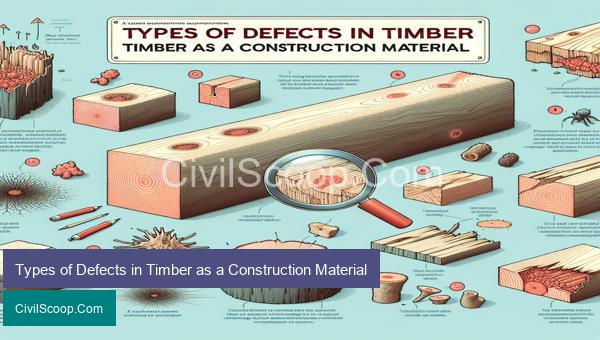
Timber is a widely used construction material due to its natural strength, durability, and aesthetic appeal. However, like any other material, timber is not immune to defects that may affect its structural integrity and overall performance. In this article, we will discuss the common types of defects found in timber as a construction material.
1. Knots
Knots are a natural feature of timber that occurs when a branch or limb grows out of the tree trunk. While small knots do not significantly affect the strength of timber, larger ones can cause structural weaknesses and reduce the overall strength of structural members. Knots can also lead to splitting and cracking, making the timber less durable.
2. Checks and Splits
Checks are cracks that develop on the surface of the timber during the drying process. They occur mainly due to differences in moisture content in different parts of the timber. These cracks can eventually lead to splits, which run through the entire length of the timber. These defects reduce the strength and stiffness of the timber, making it more prone to damage.
3. Shakes
Shakes are defects caused by the separation of rings in the timber, leading to cracks or breaks across the annual rings. They can occur due to improper seasoning, drying, or handling of timber. Shakes can weaken the timber and make it more susceptible to moisture, insects, and decay.
4. Wane
Wane is a defect that occurs on the edges of timber, leaving the rounded or uneven surface. It happens when the timber is cut from the outer portion of the tree trunk, which contains bark and sapwood. Wane can reduce the strength and load-bearing capacity of timber and can also create uneven surfaces, making it challenging to use in construction.
5. Rot and Decay
Rot and decay are caused by the growth of fungi in timber, leading to its deterioration. It occurs when timber is exposed to high moisture levels, which provide ideal conditions for fungi to thrive. Rot can weaken the timber and compromise its structural integrity, making it unsuitable for construction.
6. Insect Infestation
Insects, such as termites, borers, and beetles, can cause significant damage to timber by feeding on it and weakening its structure. Infestation mostly occurs in moist and damp timber, making it essential to protect timber from excessive moisture exposure.
7. Warping
Warping is a natural defect in timber that occurs when it is subjected to changes in temperature and humidity. It can cause the timber to bend, twist, or bow, affecting its appearance, strength, and functionality. Timber with excessive warping cannot be used as structural members and may need to be replaced.
In conclusion, timber is a versatile and widely used construction material, but it is susceptible to various defects that can affect its performance. To avoid using timber with significant defects, it is crucial to carefully inspect and properly treat timber before using it in construction. Regular maintenance and protection measures can also help prolong the lifespan and durability of timber structures.
Defects in timber due to Natural Forces
Wood is a natural material that is widely used in construction due to its strength, versatility, and sustainability. However, timber is prone to defects caused by natural forces, which can greatly affect its quality and durability. In this article, we will discuss the various defects in timber due to natural forces.
1. Knots
Knots are common defects in timber that occur when a branch is incorporated into the wood. These knots can weaken the wood and reduce its strength and stiffness. They also cause an uneven texture and make it difficult to work with the wood.
2. Shake
Shakes are splits in the timber that are caused by the movement of the tree due to high winds or changes in temperature. These splits can be either radial or tangential and can greatly affect the strength and appearance of the wood.
3. Checking
Checking is a defect in timber where cracks develop on the surface of the wood due to the drying process. This is a common defect in freshly cut timber and can greatly affect its strength and resistance to decay.
4. Warping
Warping is the distortion of timber due to changes in moisture content. This can occur due to uneven drying, changes in temperature, or exposure to sunlight. Warping can affect the appearance and structural integrity of the wood.
5. Decay and Rot
Wood is susceptible to decay and rot due to the presence of fungi and bacteria. These microorganisms thrive in moist and humid environments and can cause the wood to lose its strength and become structurally unstable.
6. Insect Infestation
Insects, such as termites and wood borers, are another common cause of defects in timber. These insects feed on the wood, causing it to weaken and deteriorate. This can greatly affect the structural integrity of the wood and make it unusable.
7. Weathering
Exposed timber is vulnerable to weathering, which is caused by exposure to sunlight, rain, and wind. This can cause the wood to fade in color, lose its strength, and become prone to decay.
8. Fire Damage
Timber is a combustible material, and exposure to fire can cause significant damage to its structural integrity. Depending on the severity of the fire, the wood may lose its strength and possibly collapse.
To minimize the impact of these defects, it is important to properly inspect and treat timber before using it in construction. This includes proper seasoning and drying of the wood, treatment with preservatives to prevent decay and insect infestation, and fire-retardant coatings to improve its fire resistance.
In conclusion, defects in timber caused by natural forces can greatly affect its quality and durability, making it important to take proper precautions and treatment measures. As a civil engineer, it is crucial to understand these defects and take suitable measures to ensure the safety and reliability of timber structures.
Defects in timber due to Fungi
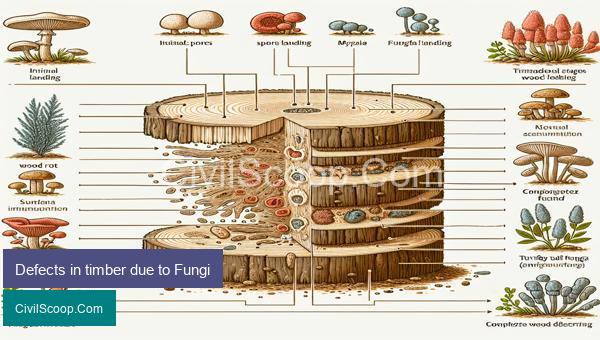
Timber is a widely used building material due to its strength, durability, and aesthetic appeal. However, timber can be susceptible to defects caused by fungal attack, which can compromise its structural integrity and shorten its lifespan. Fungi belong to a large group of microorganisms that break down organic matter, and they can be found in various environments, including in the soil, air, and on the surface of timber.
The most common types of fungi that attack timber are wood rotting fungi and surface moulds. Wood rotting fungi feed on the cellulose and lignin in timber, breaking it down and causing structural damage. Surface moulds, on the other hand, cause discoloration and surface decay but do not affect the timber’s structure.
The presence of moisture is a crucial factor in the growth of fungi on timber. When timber is exposed to high levels of moisture or damp conditions, it becomes an ideal environment for fungi to thrive. This is why timber used in outdoor structures, such as fences and decks, are more susceptible to fungal attack than indoor structures.
Fungal attack on timber can lead to a variety of defects, including:
1. Discoloration: Surface moulds can cause discoloration on the surface of timber, giving it a black, green, or blue appearance. This can affect the aesthetics of timber, making it less appealing.
2. Softening of timber: Wood rotting fungi can cause timber to soften and lose its structural integrity. This is a severe defect that can compromise the stability of a structure.
3. Cracking and warping: Fungal attack can cause timber to crack and warp, leading to uneven surfaces and compromising the strength of the timber.
4. Decay: The most severe defect caused by fungal attack is decay. Wood rotting fungi break down the cellulose and lignin in timber, causing it to decay. This defect can lead to structural failure and render the timber unusable.
5. Insect infestation: Fungi can attract insects such as wood boring beetles, which can further damage the timber by creating holes and tunnels, weakening its structure.
Prevention and Treatment of Fungal Attack:
Preventing fungal attack is crucial in ensuring the longevity and structural integrity of timber. Here are some steps that can be taken to prevent and treat fungal attack on timber:
1. Correct construction and design: Ensuring proper ventilation and drainage in structures built with timber can prevent moisture buildup, which is a key factor in fungal growth.
2. Use treated timber: Treated timber has been impregnated with chemicals that make it resistant to fungal attack.
3. Regular maintenance: Timber structures should be regularly inspected for signs of fungal growth and treated immediately to prevent further damage.
4. Use fungicides: Fungicides can be applied to timber at the first sign of fungal attack to prevent its spread.
In conclusion, defects in timber due to fungi can compromise its structural integrity and shorten its lifespan. However, with proper prevention and treatment methods, the risk of fungal attack can be minimized, ensuring that timber structures remain strong and durable for years to come.
Defects in Timber During Seasoning
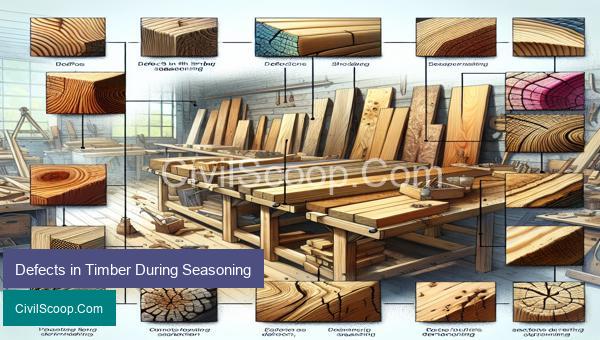
Timber is a natural product and it is widely used in construction due to its strength and durability. However, timber is also susceptible to defects during the seasoning process, which is the process of removing moisture from the wood to improve its durability and stability. Some of the common defects found in timber during seasoning are discussed below.
1. Shakes and Checks: Shakes are cracks that occur in the radial direction of the logs, while checks are cracks that occur in the tangential direction. These defects are caused by rapid drying of the outer surface of the timber, resulting in unequal shrinkage. Shakes and checks can weaken the timber and reduce its strength and load-bearing capacity.
2. Warping: This defect occurs when the timber changes its shape from its original form due to uneven shrinkage and drying. Common types of warping are bowing (curvature along the length), crooking (lateral curvature), cupping (curvature across the width), and twisting (combination of bowing and crooking). Warping can make the timber unsuitable for construction as it affects the overall stability and aesthetics of the structure.
3. Decay: Timber can be attacked by fungi and bacteria, resulting in decay. This is more likely to occur during the seasoning process when the moisture content of timber is high. Decay can weaken the timber and make it prone to damage from environmental factors such as moisture, insects, and pests.
4. Sap Stain: During the seasoning process, the timber may develop a dark-colored stain due to the growth of fungi on the surface. This defect does not weaken the strength of timber but it affects the appearance and reduces its market value.
5. Insect Damage: Insects such as beetles, termites, and wood borers can cause damage to timber by burrowing into the wood and feeding on its cellulose fibers. This can significantly reduce the strength of timber and make it vulnerable to collapse.
Prevention and Control of Defects:
1. Proper Drying: The main factor that contributes to defects during seasoning is improper drying. To prevent this, timber should be slowly and uniformly dried in a controlled environment with proper ventilation and humidity levels. This helps to reduce the risk of shakes, checks, warping, and decay.
2. Proper Storage: Timber should be stored in a dry and well-ventilated area to prevent the growth of fungi and bacteria. It should also be protected from insect infestation by using suitable chemical treatments.
3. Use of Treated Timber: Treated timber, which has been impregnated with preservatives, can withstand moisture and insect attacks. This can also extend the lifespan of timber and reduce the risk of defects during seasoning.
In conclusion, defects in timber during seasoning can weaken its strength and affect its durability. Therefore, it is crucial to follow proper procedures and precautions during the seasoning process to prevent and control these defects. As a civil engineer, it is important to carefully inspect and select good quality timber for construction to ensure the safety and stability of the structure.
Defects in Timber During Conversion
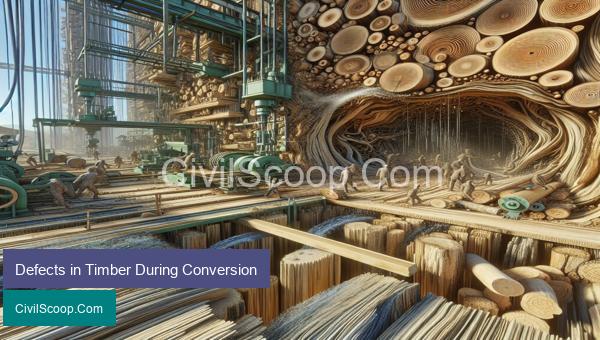
Defects in timber are the imperfections found in wood during the process of conversion from raw logs to usable lumber. These defects can occur in different forms, sizes, and severity levels, depending on the type of wood and the conversion process used. Timber defects not only affect the appearance of the wood, but they can also have a significant impact on its strength and durability. As a civil engineer, it is important to understand the various defects that can occur in timber during conversion and their potential consequences.
1. Knots
One of the most common defects found in timber is knots. These are portions of the wood where branches used to grow, resulting in a circular or oval-shaped protrusion. These knots can significantly affect the strength and quality of the wood, as they create stress points that can lead to cracking or splitting. The size and placement of knots can determine the severity of their impact on the wood.
2. Shakes
Shakes are cracks that occur in the wood’s grain, either due to natural growth processes or mechanical damage during handling or conversion. These defects can significantly weaken the wood and make it more prone to decay and rot. Shakes can also create gaps between wood pieces, reducing the wood’s overall stability.
3. Wane
Wane is a defect in which the edges of the wood contain bark or the rounded surface from where the tree branches were removed. This defect can occur when the logs are not properly squared during conversion, resulting in timber with irregular surfaces. Wane can reduce the load-bearing capacity of the wood, making it unsuitable for structural purposes.
4. Checks and Splits
Checks and splits are cracks that occur along the wood’s length, and they can be caused by natural drying processes or over-drying during conversion. These defects can weaken the wood and increase its susceptibility to rot and decay. They can also create structural instability, leading to potential safety hazards.
5. Warp
Warping is a defect that causes the wood to bend or twist out of its original shape, making it difficult to use in construction and carpentry works. Warping can occur during the drying process, where the wood experiences uneven moisture loss, resulting in uneven shrinkage and movement.
6. Insect Damage
Insects, such as termites, beetles, and ants, can cause significant damage to timber, especially if left untreated. These pests can burrow into the wood, creating tunnels and weakening its structure. Insect damage can cause structural instability and reduce the lifespan of the wood.
These are some of the common defects found in timber during conversion. While some of these defects are natural and can be found in any wood, others may occur due to improper handling or conversion processes. As a civil engineer, it is essential to be aware of these defects and their potential impact on the strength and durability of timber. Proper selection and treatment of wood can help minimize these defects and ensure the optimal performance of timber in construction and other applications.
Defects in timber due to Insects
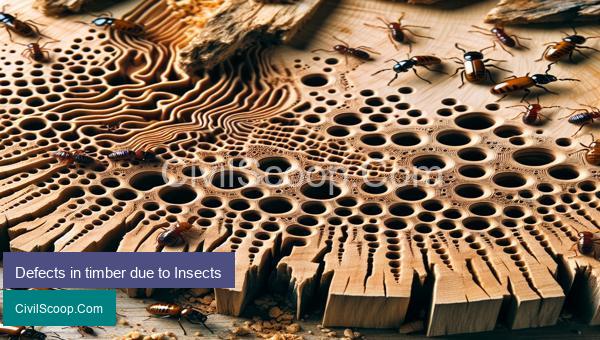
Timber is a widely used construction material in many industries, including civil engineering. It is a strong, durable and sustainable material that has been used for centuries. However, like all natural materials, timber is prone to defects caused by various factors. One of the major causes of defects in timber is insects.
Insects can cause significant damage to timber, leading to structural and aesthetic defects. Some of the common types of insects that can cause damage to timber include termites, beetles, ants, and powderpost beetles. These insects feed on wood and can cause significant damage if not detected and treated in a timely manner.
One of the most common defects in timber due to insects is called “frass.” Frass is a mixture of insect feces, chewed wood particles, and saliva that is left behind by insects as they feed inside the timber. This can weaken the structural integrity of the timber and make it prone to breakage or collapse. In severe cases, frass can also attract other insects, leading to further damage.
Another common defect caused by insects is “tunnels.” Tunnels are created by insects as they burrow and feed inside the timber. These tunnels weaken the timber’s structure and can significantly reduce its load-bearing capacity. In some cases, the tunnels can be so extensive that the timber becomes hollow, making it unsuitable for use in construction.
Carpenter ants are known to cause “galleries” in timber. These are large chambers created by ants as they remove the wood to build their nests. These galleries can weaken the timber and cause it to break or sag under heavy loads.
Termites are among the most damaging insects to timber. They feed on the cellulose present in the wood, which is the main component that gives timber its strength. As they feed, termites can weaken the timber’s structure, making it prone to breakage.
Besides structural defects, insects can also cause aesthetic defects in timber. For example, beetles can leave behind “exit holes” when they emerge from the timber after completing their life cycle. These holes can significantly reduce the timber’s aesthetic appeal, making it unsuitable for use in visible areas.
To prevent defects in timber due to insects, proper preventive measures should be taken. This includes treating timber with insecticides and regularly inspecting for any signs of infestation. Early detection and treatment can help minimize the damage and preserve the structural integrity of the timber.
In conclusion, insects can cause significant defects in timber, compromising its strength, stability, and aesthetic appeal. As a civil engineer, it is essential to be aware of the different types of insect damage and take necessary precautions to prevent and treat them. Using insect-resistant timber or treating timber with preservatives and insecticides can help mitigate the risk of defects due to insects. Regular inspection and maintenance of timber structures can also help prolong their lifespan and ensure their safety.
Conclusion
In conclusion, timber has been used in construction for centuries and continues to be a highly sought-after material due to its many benefits. Its strength, versatility, sustainability, and aesthetics make it a top choice for builders and architects. The advancements in timber technology and engineering have also made it possible to use timber in larger and more intricate structures. While there are challenges and concerns regarding timber as a construction material, the industry is actively addressing these issues and finding ways to make timber even more efficient and sustainable. As the demand for eco-friendly and sustainable building materials increases, timber will continue to play a vital role in the construction industry.