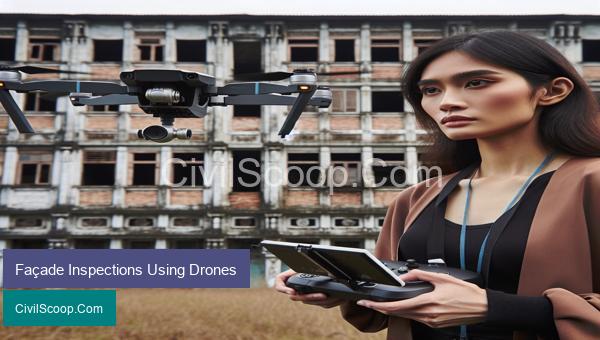
Façade inspections are an essential part of maintaining the safety and structural integrity of buildings. Traditionally, these inspections have been performed manually by trained professionals, which can be time-consuming, costly, and sometimes dangerous. However, with advancements in technology, drones have emerged as a valuable tool for conducting façade inspections. These unmanned aerial vehicles can provide a safe and efficient solution for assessing the condition of building exteriors. In this article, we will explore the use of drones in façade inspections, their benefits, and their role in revolutionizing the building maintenance industry.
Table of Contents
Facade Inspection Safety Program (FSP), New York City
Facade Inspection Safety Program (FSP) is a mandatory program in New York City that requires building owners to inspect the exterior facades of their buildings every five years. This program was implemented in response to a tragic incident in 1979 when a piece of masonry fell from a building and killed a pedestrian. After this incident, the city government realized the importance of proper facade inspection and maintenance to ensure public safety.
The FSP is overseen by the New York City Department of Buildings (DOB) and applies to all buildings that are over six stories high. Under this program, building owners are required to hire a qualified professional, such as a licensed architect or engineer, to conduct a thorough inspection of the exterior facade of their building. The inspection must be performed using a “safety first” approach, where the safety of pedestrians and occupants is the top priority.
The FSP has specific guidelines for the facade inspection process, including the qualifications and experience of the inspectors, the methods and equipment used for inspection, and the type of documentation required. The inspection report must be submitted to the DOB along with the necessary repair or maintenance plans.
One of the key components of the FSP is maintaining an accurate and up-to-date facade inspection report (FIR) for every building. The FIR includes a detailed description of the building’s facade, including its materials, construction type, and potential hazards. It also includes a record of previous inspections and repairs, as well as any recommendations for future maintenance.
The enforcement of the FSP is taken seriously, and building owners who fail to comply with the program are subject to fines and penalties. Additionally, if a building’s facade is found to be unsafe, the DOB has the authority to issue a violation and order immediate repairs.
The FSP has significantly improved building safety in New York City. Since its implementation, the number of facade-related accidents has decreased significantly. It has also helped maintain the city’s architectural heritage by ensuring that historic facades are properly maintained and preserved.
In conclusion, the Facade Inspection Safety Program in New York City is a crucial program that ensures the safety of pedestrians and occupants by mandating regular inspections and maintenance of building facades. It is a testament to the city’s commitment to the safety of its residents and visitors, and it serves as a model for other cities to follow in order to prevent tragedies and maintain the integrity of their buildings.
Facade Inspection Using Drones
In the field of civil engineering, the inspection of buildings and structures is an important aspect of ensuring safety and durability. Traditional methods of facade inspection often involve manual surveys, which can be time-consuming, costly and pose safety risks to the inspectors. However, with the advancement of technology, a new method of facade inspection using drones has emerged, revolutionizing the way engineers assess the integrity of building facades.
Facade inspection is crucial in determining the deterioration of building materials such as masonry, concrete, and metal, which can result in potential hazards or structural failures. It involves a thorough examination of the exterior components of a building, including walls, balconies, windows, and roofing.
Using drones for facade inspection has several advantages over traditional methods. Firstly, it reduces the time and effort required for conducting a survey, as drones are equipped with high-resolution cameras that can capture detailed images in a fraction of the time it would take for a manual inspection. This also allows for more frequent and efficient inspections, helping to identify potential issues before they become major problems.
Another major advantage of using drones for facade inspection is safety. Drones can access hard-to-reach or hazardous areas, eliminating the need for human inspectors to climb scaffolding or use hydraulic lifts. This reduces the risk of accidents and injuries, making it a safer alternative for both engineers and building occupants.
Furthermore, drone inspections can provide a comprehensive and accurate report on the condition of a facade. The high-resolution images captured by the drone can be analyzed to identify even minor cracks or defects that may not be visible during a visual inspection. This level of detail allows engineers to make informed decisions and recommendations for maintenance or repair work.
The use of drones also minimizes disruptions to building occupants and the surrounding area. Traditional methods of facade inspection often require closures of sidewalks and streets, causing inconvenience to pedestrians and vehicular traffic. Drones, on the other hand, can navigate through tight spaces and congested areas without any disruptions, ensuring minimal disturbance to the public.
However, like any other technology, drone inspections also have some limitations. They are not suitable for use in adverse weather conditions such as heavy rain or strong winds. Additionally, proper training and certification are required for drone operators to ensure safe and accurate inspections.
In conclusion, facade inspection using drones has proven to be a game-changer for civil engineers. It offers a faster, safer, and more efficient way to assess the condition of building facades, ultimately leading to more cost-effective and timely maintenance strategies. As technology continues to advance, we can expect to see further improvements and developments in the use of drones for facade inspection.
Key Considerations in Facade Inspection Using Drones
With the advancements in technology, drones have become an essential tool in the field of civil engineering. One of the many applications of drones in civil engineering is facade inspection. Facades, the exterior face of a building, need regular inspection to ensure their structural integrity and safety. Traditionally, facade inspections were done by human inspectors, but using drones can provide significant advantages, making the process more efficient and accurate. However, there are some key considerations that must be kept in mind when using drones for facade inspection.
1. Drone Selection and Flight Planning:
The first step in using drones for facade inspection is selecting the appropriate drone. The chosen drone should be able to carry the necessary equipment, such as cameras, sensors, and LiDAR (Light Detection and Ranging) scanners. An efficient drone should also be capable of operating in different weather conditions and have a long flight time to cover larger areas. Additionally, proper flight planning is essential to ensure the entire facade is covered, and the drone can safely navigate around obstacles on the building.
2. Appropriate Sensors and Equipment:
The selection of sensors and equipment is crucial in ensuring accurate and comprehensive facade inspection. Different kinds of sensors can be attached to the drone, such as thermal cameras, LiDAR scanners, and high-resolution cameras, depending on the desired outcome of the inspection. For example, thermal cameras can detect heat loss, water leakage, or other defects not visible to the naked eye. Similarly, LiDAR scanners can provide detailed 3D images of the facade, helping to identify cracks, deformations, or other abnormalities.
3. Data Management and Analysis:
With drones, thousands of high-quality images and data can be collected in a short time, but managing and analyzing this data can be challenging. Advanced software and techniques are required to process the large amounts of data collected by drones. This includes creating 3D models, comparing images from different inspections to identify changes, and finding potential defects for further investigation.
4. Safety Measures:
Safety is of utmost importance when using drones for facade inspection. Civil engineers must ensure that the drone operator has the necessary training and certifications. The drones should also be regularly maintained to avoid any malfunctions during the inspection. It is also crucial to limit the disturbance to the surrounding environment and pedestrians during the inspection.
5. Legal and Regulatory Requirements:
Before conducting drone inspections, engineers must be aware of the legal and regulatory requirements concerning drone operations in their area. These regulations may include obtaining permits, restricting the flying altitude of the drone, or specific flight zones. It is essential to comply with these requirements to avoid any legal implications.
6. Human Inspections:
Although drones have many benefits in facade inspections, human inspections are still necessary. This includes the visual inspection of areas that could not be captured by drones, such as tight spaces or areas with limited accessibility. Human inspections can also provide a more in-depth analysis of potential defects identified by the drones.
In conclusion, facade inspection using drones has numerous advantages, including time and cost-efficiency, high accuracy, and safety. However, proper planning, selection of equipment and sensors, data management, safety procedures, and compliance with legal requirements are crucial for successful drone inspections. Along with human inspections, the combination of drones and advanced technology can greatly enhance facade inspection and contribute to the overall safety and maintenance of buildings.
Conclusion
In conclusion, using drones for façade inspections has proven to be a valuable and efficient tool for building maintenance and safety. With their advanced technology and capabilities, drones are able to capture high-quality images and videos of hard-to-reach areas, allowing for a thorough and accurate assessment of a building’s façade. This method not only saves time and resources but also reduces the risk of accidents for personnel, making it a cost-effective and safe solution. As the use of drones continues to evolve, we can expect to see more buildings opting for this innovative and effective approach to façade inspections.