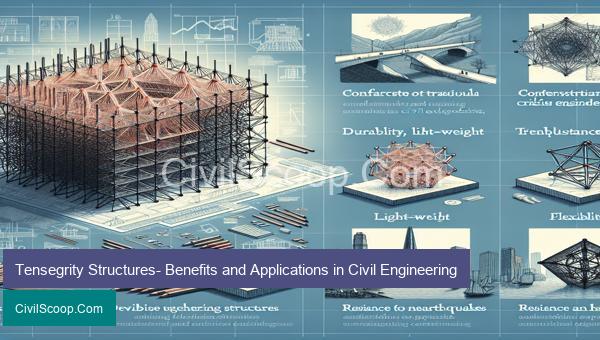
Tensegrity structures, also known as tensional integrity structures, have been gaining increasing attention in the field of civil engineering due to their unique design and numerous benefits. These structures utilize the concept of tension and compression, where a series of compressed elements are held in place by a network of tensioned cables. This innovative structural system has opened up a new realm of possibilities in the construction industry, offering a wide range of applications and advantages that traditional structures may not be able to provide. In this article, we will delve into the benefits and applications of tensegrity structures in civil engineering, highlighting their potential to revolutionize the way we build and design structures.
Table of Contents
Examples of Tensegrity Structures Used in Civil Engineering
Tensegrity structures, also known as tension-integrity structures, are a unique type of structure that has gained popularity in civil engineering for their cost-effectiveness, durability, and eye-catching design. These structures use a combination of tension and compression elements to create a self-supporting form that can withstand heavy loads and extreme weather conditions. Here are some examples of tensegrity structures used in civil engineering.
1. The Eero Saarinen Gateway Arch – St. Louis, Missouri, USA
One of the most iconic examples of tensegrity structures in civil engineering is the Gateway Arch in St. Louis, Missouri. Designed by architect Eero Saarinen, this 630-foot tall structure is made up of a stainless steel skin and a crisscrossing system of steel tension members. These tension members support the entire weight of the arch, allowing it to stand tall without any additional internal supports.
2. Kurilpa Bridge – Brisbane, Australia
The Kurilpa Bridge, located in Brisbane, Australia, is a pedestrian bridge that spans the Brisbane River. It is an example of a tensegrity structure that uses compression elements in the form of steel trusses and tension elements in the form of steel cables to create a lightweight and strong bridge. The bridge’s design is not only functional but also serves as a visually appealing landmark for the city.
3. Olympic Stadium Roof – Munich, Germany
The Olympic Stadium in Munich, Germany, is another notable example of a tensegrity structure in civil engineering. The roof of the stadium is a suspended tensile structure that consists of a series of steel cables and compression struts. This design allowed for a large, open space without the need for internal supports, making it an ideal choice for sporting events.
4. The Zaha Hadid Heydar Aliyev Centre – Baku, Azerbaijan
The Heydar Aliyev Centre in Baku, Azerbaijan, designed by architect Zaha Hadid, is a prime example of a tensegrity structure used in modern architecture. This large cultural complex features a unique, undulating shape that is made possible by a network of steel compression elements and tension cables. The complex encompasses an auditorium, conference spaces, and a museum, creating a functional and innovative design.
5. Solar Canopy – Lisbon, Portugal
The solar canopy in Lisbon, Portugal, is a public structure that provides both shade and renewable energy through its solar panels. The canopy is constructed using a tensegrity system, with steel tension cables supporting a series of solar panels. This design not only provides functional benefits but also adds an aesthetically pleasing element to the urban landscape.
In conclusion, tensegrity structures have proven to be a versatile and innovative solution in civil engineering, with numerous examples being implemented in various forms around the world. These structures not only showcase the potential of this unique design approach but also serve as a testament to the advancements in civil engineering and architectural design.
Applications of Tensegrity Structures
Tensegrity structures, also known as tension structures, are a form of lightweight structures that rely on the balance between tension and compression elements to provide stability. The term “tensegrity” is derived from the words “tension” and “integrity,” highlighting the key principles of these structures: the use of continuous tension and discrete compression elements to create a self-supporting system.
Tensegrity structures have been gaining popularity in recent years due to their versatility and efficiency in various applications. As a civil engineer, here are some of the applications of these structures that you should know about:
1. Bridges:
Tensegrity structures can be used to construct lightweight, adaptable, and aesthetically pleasing bridges. The constant tension in the structure allows for greater flexibility in the design and reduces the overall weight of the bridge. These structures are also able to withstand high winds and seismic forces, making them suitable for use in different environments.
2. Canopies and Roofs:
Tensegrity structures are also ideal for creating canopies and roofs for both indoor and outdoor spaces. The continuous tension elements act as a flexible membrane, while the discrete compression elements provide the necessary support. These structures are lighter in weight compared to traditional roofs, making them a popular choice for large public spaces such as stadiums and convention centers.
3. Skyscrapers:
Tensegrity structures have the potential to revolutionize the construction of tall buildings. With their lightweight design and the ability to withstand wind forces, these structures can be used to create tall, yet stable, skyscrapers. They also offer greater flexibility in design, allowing for more creative and innovative structures.
4. Roof Solar Panels:
Tensegrity structures are also used in the construction of solar panel arrays mounted on roofs. The continuous tension elements provide support for the panels, while the discrete compression elements distribute the load to the roof. These structures are an efficient way to install solar panels on buildings without adding significant weight to the roof.
5. Geodesic Domes:
Tensegrity structures can be used to construct geodesic domes that are self-supporting and do not require internal columns or supports. These structures are suitable for use in a wide range of applications, such as greenhouses, exhibition spaces, and even houses. The lightweight nature of the structure also makes it easy to transport and assemble in remote locations.
6. Temporary Structures:
Tensegrity structures have also found applications in creating temporary structures, such as exhibition booths, stages, and event tents. These structures are easy to assemble, disassemble, and transport, making them an ideal choice for temporary structures.
In addition to these applications, tensegrity structures are also used in the construction of towers, masts, and antennas, as well as in aviation and aerospace industries. With their diverse range of applications, these structures are proving to be a game-changer in the field of civil engineering, offering lightweight, efficient, and flexible solutions to various construction challenges.
Basic Features of Tensegrity Structures
Tensegrity structures, also known as tensional integrity structures, are a unique form of engineering that utilizes tension and compression to create self-supporting and stable structures. This unique approach to construction was developed by Buckminster Fuller in the mid-20th century and has since been used in various applications, from architecture and design to aerospace and biomechanics.
The basic principle of tensegrity structures is that the structure is made up of elements that are either in compression or in tension, and each element is isolated from one another. This means that the structure remains stable due to the balance between the compressive and tensile forces, rather than relying on the strength of individual elements.
Some of the key features of tensegrity structures include:
1. Lightweight and efficient design: Tensegrity structures are known for their lightweight and efficient design. Due to the balance of forces, the structures can support large loads with a minimal amount of material, making them highly efficient and cost-effective.
2. Flexibility and adaptability: Tensegrity structures are highly flexible and adaptable, making them suitable for various applications and environments. They can withstand external forces such as wind, earthquakes, and temperature changes without compromising their structural integrity.
3. Non-rigid and dynamic: Unlike traditional rigid structures, tensegrity structures are non-rigid and dynamic. They can change shape and adjust to the surrounding environment, making them ideal for structures that need to move or respond to external forces.
4. Scalability: Tensegrity structures can be scaled up or down without any major changes to the design or structural integrity. This makes them suitable for a wide range of sizes, from small structures like furniture to large-scale constructions like bridges and domes.
5. Aesthetically pleasing: The unique design of tensegrity structures often results in visually striking and aesthetically pleasing structures. They are often used in architecture and design to create eye-catching and unconventional buildings and sculptures.
6. Durability: Tensegrity structures are known for their high durability and longevity. As there are no rigid connections, there is no stress concentration in any particular area, reducing the risk of structural failure over time.
In conclusion, tensegrity structures offer a unique approach to construction that combines lightweight and efficient design with flexibility, scalability, and durability. These structures have the potential to revolutionize the way we build and have already proven to be successful in various applications.
Benefits of Tensegrity Structures
Tensegrity structures have gained popularity in the field of civil engineering due to their unique and efficient design. These structures stand out for their ability to distribute and transfer loads in a highly efficient manner, resulting in several benefits. Some of the key benefits of tensegrity structures are:
1. Lightweight: Tensegrity structures are inherently lightweight due to their design, which involves a network of tensioned cables and compression elements. This makes them ideal for applications where weight is a crucial factor, such as in bridge construction or temporary structures.
2. High Strength-to-Weight Ratio: Despite their lightweight construction, tensegrity structures have a high strength-to-weight ratio. This is because the cables are tensioned to their maximum capacity, allowing them to bear significant loads without being overstressed.
3. Flexibility: Tensegrity structures are highly flexible and can adapt to different loading conditions, making them suitable for a wide range of applications. This flexibility also allows them to withstand external forces such as wind or seismic activity without causing significant damage.
4. Cost-effective: The use of tensioned cables in tensegrity structures eliminates the need for large, expensive compression elements, reducing the overall construction cost significantly. Additionally, their lightweight nature makes them easier and cheaper to transport and install.
5. Aesthetic Appeal: Tensegrity structures have a unique and eye-catching appearance due to their minimalistic design. This makes them popular for architectural purposes, as they can be used to create visually appealing structures such as footbridges or sculptures.
6. Durability: Tensegrity structures are highly durable, thanks to their ability to distribute and transfer loads. This allows them to withstand harsh environmental conditions and resist fatigue due to cyclical loading, ensuring a longer lifespan compared to traditional structures.
7. Sustainable: Tensegrity structures require fewer materials for construction, reducing the overall carbon footprint of a project. Additionally, their light weight and high strength-to-weight ratio make them more energy-efficient during transportation and construction.
In conclusion, tensegrity structures offer several benefits in terms of cost, durability, and sustainability compared to traditional structures. Their unique design and versatile nature make them well-suited for a wide range of applications, making them a popular choice in modern civil engineering projects.
Conclusion
In conclusion, tensegrity structures have revolutionized the field of civil engineering with their unique design and numerous benefits. Their ability to distribute loads efficiently, withstand various environmental forces, and adapt to different conditions make them highly versatile for a wide range of applications. From impressive architectural designs to strong and resilient bridges and towers, tensegrity structures have proven to be a viable and practical solution for the evolving needs of the civil engineering industry. As technology continues to advance, we can expect to see even more innovative and groundbreaking uses of tensegrity structures in the future. Overall, their benefits and applications have made them an indispensable tool for modern civil engineers and will undoubtedly continue to shape the landscape of the built environment for years to come.